TribeMe
Multi-Brand Marketplace Dashboard
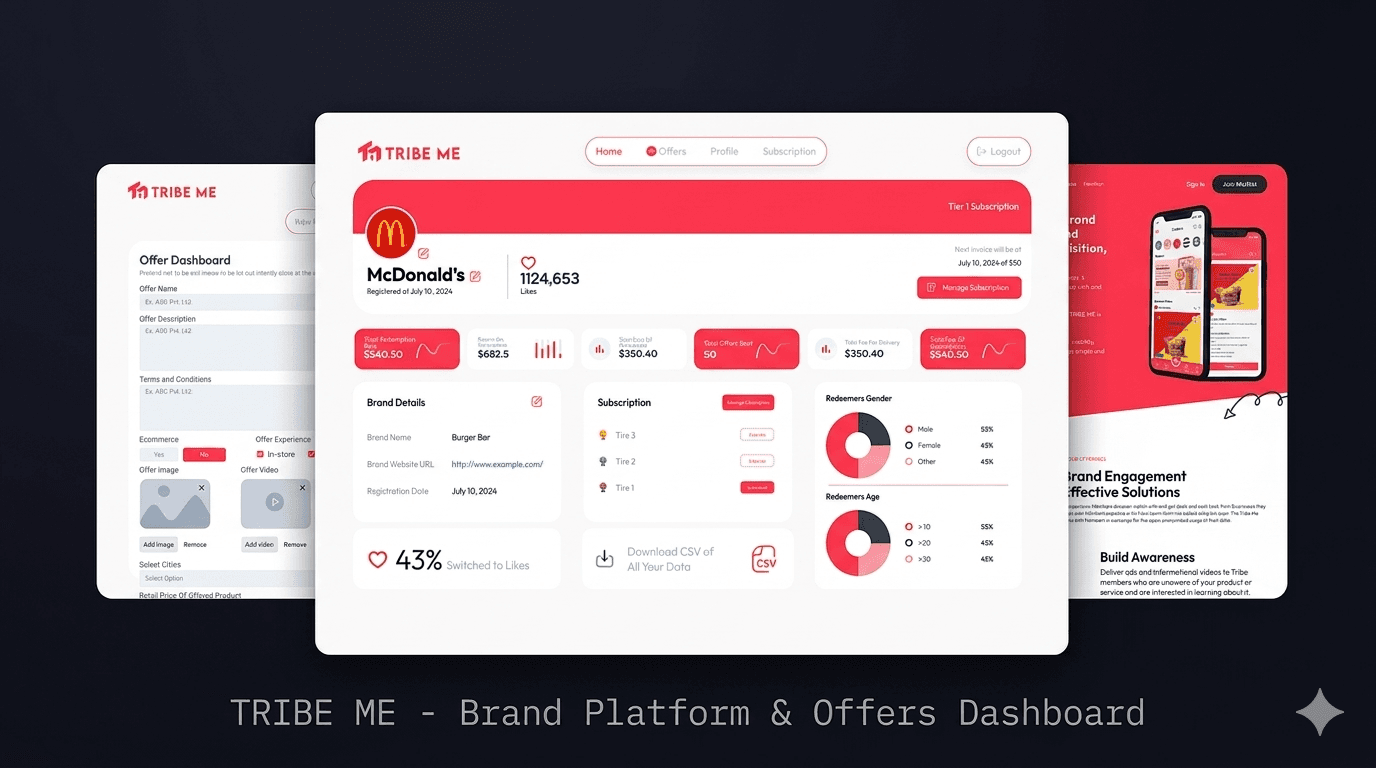
Brand marketplace portal featuring a brand onboarding flow, product and offer management, promo-code generation, and analytics dashboards.
01Context & Problem
The project required a centralized portal for retail brands to participate in a shared marketplace. Key requirements included a brand onboarding flow, product and offer management, promo-code generation, and analytics dashboards.
02Engineering Ownership
What I Built
- ▸Developed the brand onboarding flow using Next.js and React.
- ▸Built product and offer management interfaces and REST APIs with Express.js and MongoDB.
- ▸Implemented promo-code generation logic and backend storage using Node.js and Mongoose.
- ▸Created analytics dashboards with Redux Toolkit for managing dashboard views.
What I Did Not Build
- ▸Worked from designs provided by the client rather than producing the visual design myself.
03Stack & Rationale
Dashboard framework supporting brand onboarding and analytics displays.
REST APIs handling brand configuration, offer updates, and promo-code generation.
Document storage for brands, products, offers, and promotional vouchers.
Client-side state management for product filtering and dashboard interactions.
04System Architecture
Component topology, data flows, and authorization boundaries:
05Authentication & Authorization
06Hard Technical Challenges & Solutions
Separation Between Competing Brands
Problem: Merchants required access to manage their own products, offers, and analytics without viewing data belonging to other brands.
Solution: Role-based access control and tenant checks were enforced at the Express.js route level on every request, scoping database queries to the authenticated merchant.
Unique Promo-Code Generation
Problem: Generating promotional codes for brand campaigns required ensuring newly generated codes did not collide with existing active codes.
Solution: The promo-code generator checked code uniqueness against existing records in MongoDB before saving new batches.
07What I Would Do Differently Now
If I were building this platform today, I would implement automated testing for the promo-code generation logic and REST endpoints. I would also package the services with Docker and configure CI/CD with GitHub Actions for automated deployment workflows.